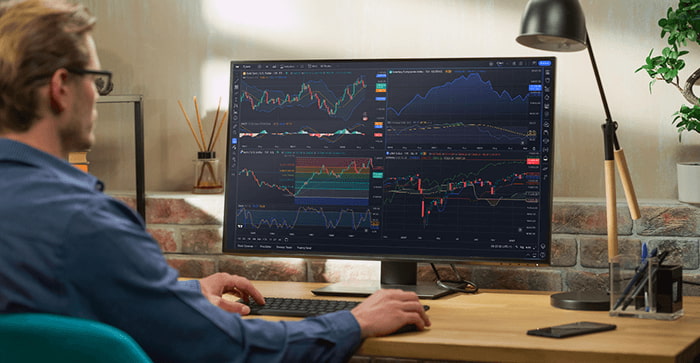
Day trading in Canada: rules, accounts, and common misconceptions
Published: Nov 17, 2021
Updated: Feb 03, 2026
Understand Canadian day trading rules, taxes, and accounts while avoiding costly misconceptions that could hurt your portfolio.
Day trading in Canada refers to buying and selling securities within the same trading day, typically focusing on small price movements. Unlike swing trading, which may hold positions for days or weeks, day traders aim to capitalize on short-term price fluctuations.
Day trading in Canada requires awareness of market volatility, market movements, and market fluctuations, as well as access to stock trading platforms that provide real-time stock market data.
Who may engage in day trading
Individual investors using a Canadian brokerage
Traders in margin accounts aiming to leverage capital
Investors monitoring news-based trading, corporate earnings, or market trends
What day trading actually is
Definition
Day trading involves buying and selling securities within the same trading day. The focus is on capturing short-term price movements rather than holding assets long term.
What day trading is not
Long-term investing
Passive buying
Swing trading (positions held for multiple days)
Common financial instruments
Large-cap stocks
Exchange-traded funds (ETFs)
Options (in some cases)
Expectations for day traders
Day trading can require frequent monitoring of the markets, quick decision-making, and strong familiarity with price patterns and market trends. Stock market volatility, trading fees, and taxes can influence outcomes as much as trade decisions themselves. Competition among active traders may affect execution quality, and frequent trades may result in higher costs. Overall, day trading can involve high effort and high risk, with short-term gains and losses fluctuating rapidly.
Day trading rules: Where and when trading happens
Main venues
Canadians can trade on multiple exchanges depending on the securities:
TSX/TSXV for Canadian-listed stocks and ETFs
NYSE/Nasdaq for U.S.-listed stocks and ETFs
Typical hours (eastern time)
TSX Regular Session: 9:30 a.m. – 4:00 p.m. ET
U.S. Regular Session: 9:30 a.m. – 4:00 p.m. ET
Extended Hours: Pre-market and after-hours sessions vary by broker
Day-trading realities by market
U.S. financial markets often have higher liquidity and trading volume for many tickers
TSXV small-cap stocks may have low liquidity, which can lead to wider spreads and partial fills
Timing considerations
Price volatility tends to be higher near market open and close
Midday trading may see lower volume, sometimes referred to as the "lunch lull"
Earnings releases, corporate news, or macroeconomic announcements can occur outside regular hours, affecting short-term price movements
Understanding these differences can help day traders anticipate how liquidity and timing may influence order execution and trade outcomes.
The built-in brakes: Halts, circuit breakers, short-sale limits
Trading halts and volatility controls
A trading halt occurs when an exchange temporarily pauses trading in a security. These pauses can happen for several reasons:
Pending news: Corporate announcements or earnings releases
Regulatory review: Potential violations or unusual activity
Abnormal volatility: Sudden price swings beyond preset thresholds
For day traders, halts can affect execution and risk:
Orders may not fill during the pause
Prices can gap up or down when trading resumes
Common strategies cited by active traders to manage this risk include:
Reducing position sizes in stocks prone to halts
Being cautious with illiquid tickers
Monitoring news calendars for scheduled announcements
Circuit breakers and short-sale restrictions
Circuit breakers are market-wide pauses that occur during extreme moves, primarily in U.S. markets, to limit systemic risk.
Short-sale constraints involve:
Broker requirements to locate and borrow shares
Uptick rules or restrictions when a stock drops sharply
Practical impacts on day trading include:
Strategies that rely on shorting may be interrupted
Hard-to-borrow fees or forced buy-ins can add unexpected costs
Common strategies cited by active traders to manage this risk include:
Avoiding reliance on shorting microcaps
Understanding broker-specific borrow rules
Recognizing that both halts and circuit breakers can temporarily freeze stock market activity and affect liquidity is essential for day traders.
Order types & liquidity
Order types day traders may use
Day traders may use several order types to manage entries and exits:
Market vs Limit Orders: Market orders execute immediately at the prevailing price, but execution may be unfavourable during volatile or thinly traded markets. Limit orders specify a maximum (buy) or minimum (sell) price.
Stop Orders/Stop-Limit Orders: Trigger trades when a stock reaches a set price.
Bracket Orders: Some trading platforms allow entry, stop-loss, and take-profit orders simultaneously, helping define potential outcomes before entering a trade.
Time-in-Force Options: DAY (expires at end of trading day), GTC (Good-Til-Cancelled), DAY+EXT (extended-hours execution with caveats around liquidity).
Liquidity, spreads, and partial fills
Liquidity measures how easily a security can be bought or sold without moving its price.
Spreads: Low volume, small-cap stocks, or after-hours trading often widen bid-ask spreads, increasing the cost of entering/exiting trades.
Partial Fills: Thin order books may result in only part of an order being executed, creating unintended position sizes.
Trading platform access & real costs
Trading platform features for day trading
Canadians engaging in day trading may use trading platforms that offer:
Fast Execution & Reliable Order Routing: Helps reduce delays in entering or exiting trades.
Real-Time Market Data: Level 1 quotes show current bid/ask; Level 2 provides depth of market for more detailed insight.
Advanced Order Tools: Hotkeys, bracket orders, and customizable layouts can help manage multiple trades efficiently, though availability varies by broker.
Costs beyond commissions
Day traders encounter expenses that go beyond any headline commission:
Bid-Ask Spreads: The difference between buy and sell prices can create an "invisible" cost.
ECN Fees: Some brokers charge small fees per executed order routed through electronic networks.
Data Subscriptions: Live quotes, Level 2 data, and news feeds may require additional fees.
FX Conversion Costs: For U.S.-listed stocks, currency conversion can affect net returns.
Slippage: Market orders may fill at unexpected prices in fast-moving or thin markets.
Key Takeaway: Even "commission-free" accounts can carry multiple costs, making it important to understand the full trading expense picture before placing frequent trades.
Settlement is T+1: What that changes
Understanding T+1
T+1 means a trade settles one business day after it is executed. This applies to both Canadian and U.S. equities. The "T" refers to the trade date, and the "+1" refers to the settlement day when ownership and cash are officially exchanged.
Implications for day trading Canada
Faster Access to Funds: Proceeds from sales may become available sooner for withdrawals or new trades.
Reduced Buffer for Errors: Less time exists to cover funding mistakes, which may affect margin usage or account balances.
What remains the same for day traders
Execution Risk: Price fluctuations and partial fills still occur during volatile markets.
Trading Effort: Short-term trading still requires attention to liquidity, spreads, and market timing.
T+1 mainly affects the timing of cash availability and settlement mechanics, rather than altering the inherent risks or mechanics of day trading.
Taxes for Canadian day traders
Business income vs capital gains
Canadian day traders may receive different tax treatments depending on whether their trading activity is considered business income or capital gains. Capital gains generally receive investment income treatment: only 50% of the gain is taxable at the investor's marginal rate. Business income is fully taxable as regular income, meaning the entire profit contributes to taxable income.
The Canada Revenue Agency (CRA) (opens in a new tab) considers multiple factors to determine classification:
Frequency of trades: Multiple trades per day or week can indicate business activity.
Holding periods: Minutes or hours vs months.
Intention: Buying with the intent to resell quickly for profit.
Time and sophistication: Hours devoted to trading and knowledge used.
Use of leverage or margin: Borrowing to trade can signal business-like operations.
Operational resemblance: Whether the activity functions like a commercial business.
The distinction matters because the tax rate difference can be significant, and loss treatment differs: capital losses are restricted to capital gains offsets, whereas business losses can offset other income. No single factor alone decides classification; the CRA evaluates the overall facts.
TFSA/RRSP: When "business" rules can apply
Although Tax-Free Savings Account (TFSA) (opens in a new tab) gains are typically tax-free, the Canada Revenue Agency may view high-frequency, short-term trading as business activity. Systematic, intensive trading inside Tax Free Savings Accounts can trigger taxation of profits as business income. Recordkeeping becomes important for compliance.
Registered Retirement Savings Plans (RRSPs) (opens in a new tab) are less frequently targeted, but day trading activity may still raise compliance considerations. Both accounts may require careful documentation to distinguish between passive investing and business-like trading.
T1135 threshold & examples
The T1135 - Foreign Income Verification Statement (opens in a new tab) requires reporting of specified foreign property if the total cost exceeds the CRA threshold (currently $100,000 CAD).
Examples of reportable assets include:
U.S. stocks held in non-registered accounts.
Foreign cash balances or foreign ETFs in taxable accounts.
Assets inside registered accounts such as Tax Free Savings Accounts or Registered Retirement Savings Plans generally do not count toward the threshold. T1135 filing is a reporting obligation, not an additional tax itself, but failing to comply may result in penalties. Accurate records of foreign holdings, including cost base and proceeds, help meet CRA requirements.
Day Trading: Possible red flags
Possible emotional red flags
Day trading can be influenced by short-term emotions. Signals that caution against trading include:
Revenge trading: Entering positions to recover previous losses.
FOMO (Fear of Missing Out): Chasing moves without confirmation.
Trading to "make back losses": Increasing size or risk impulsively.
Possible market red flags
Certain market conditions may reduce execution quality or increase risk:
Rapidly widening spreads that increase transaction costs.
Low volume or choppy price action, which can lead to slippage.
Unclear news catalysts, making direction uncertain.
Possible personal risk red flags
Individual circumstances may signal higher risk:
Using funds needed for essential expenses.
No defined stop loss on positions.
Excessive leverage relative to account size.
Key takeaways on day trading in Canada
Day trading in Canada involves buying and selling securities within the same trading day, with the goal of capturing short-term price fluctuations rather than long-term investment gains. It can occur on Canadian exchanges such as the TSX and TSXV or U.S. exchanges like the NYSE and Nasdaq, and may include extended hours depending on the broker.
Canadians engaging in day trading may encounter multiple considerations. Brokerage accounts, margin access, and order types affect execution and potential costs, including commissions, bid-ask spreads, ECN fees, and currency conversion for U.S.-listed stocks. Market volatility, liquidity, and halts or circuit breakers can influence trading outcomes, and partial fills may create unexpected position sizes.
Tax implications depend on the classification of gains (whether the investor must claim capital gains or claim it as business income), with Canada Revenue Agency factors including frequency, holding periods, and intent affecting treatment. Registered accounts like TFSA or RRSP may still face specific rules if activity resembles a trading business.
Effective recordkeeping, awareness of regulatory requirements such as T1135, and monitoring emotional and market red flags can support clearer decision-making. Day trading carries high risk, and potential outcomes are shaped by execution, costs, market conditions, and adherence to trading account and tax rules.